The Late-Night Shema
When Does Night Begin?
Every night before we go to sleep, we say Shema. But when does “night” begin?
That is the very first question in the whole Gemara, and it is where Ein Yaakov begins too:
מאימתי קורין את שמע בערבית“From what time may we say Shema in the evening?”
You might expect the answer “when the stars come out.” Instead the Mishnah says something surprising: “From the time the kohanim go in to eat their terumah.”
Kohanim? Terumah? Why are they eating at night? Let’s find out!
The Kohanim Are Waiting
Terumah is a holy share of the harvest that only kohanim may eat, and only when they are tahor (pure).
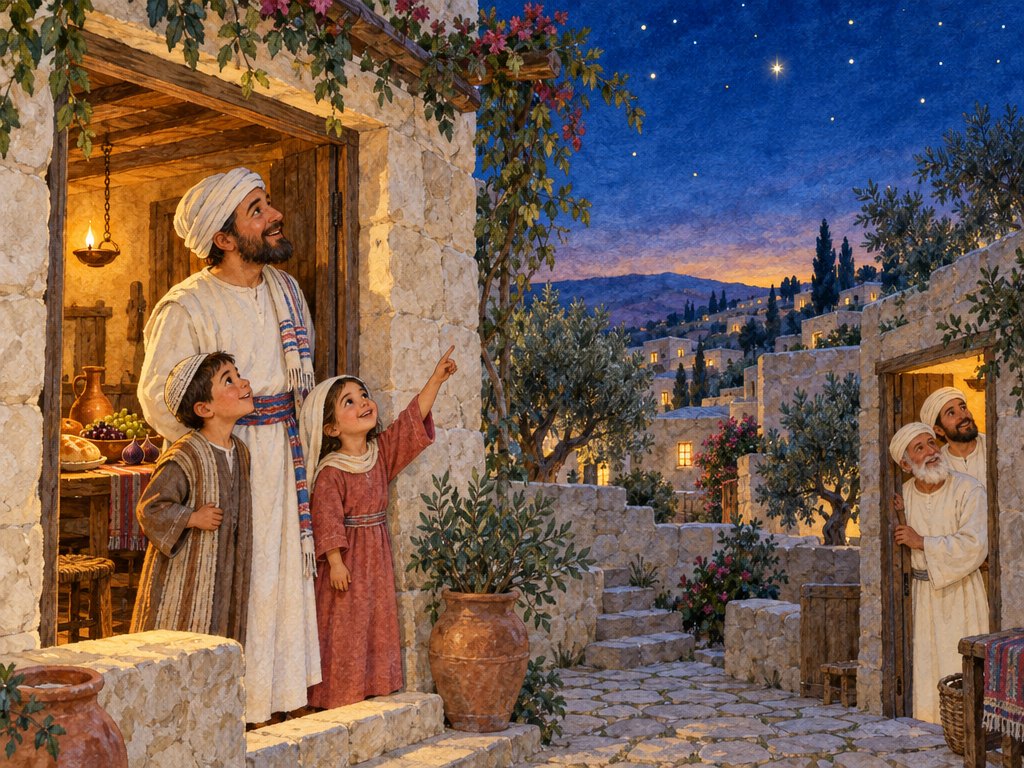
Sometimes a kohen became tamei (not pure). Rashi explains what he did: he dipped in a mikveh, and then he waited for the sun to set. Only then could he eat his terumah again.
Picture the table. The Tosafos Yom Tov says the terumah was already set out in front of them, and nothing was missing except to eat!
Everyone watches the sky. The sun goes down… the stars come out… Now! The Gemara says that is the moment the kohanim may eat. And that is the moment the time for evening Shema begins.
How Late Is Too Late?
So we know when evening Shema starts. But until when may we say it? The Sages gave three different answers:
- Rabbi Eliezer: until the end of the first “watch” of the night. Rashi explains: the first third of the night.
- The Chachamim: until chatzos, midnight.
- Rabban Gamliel: until amud hashachar, the very first light of dawn.
Three great Sages, three answers. What should a person do if it gets very late? A story will show us.
A Wedding Under the Stars
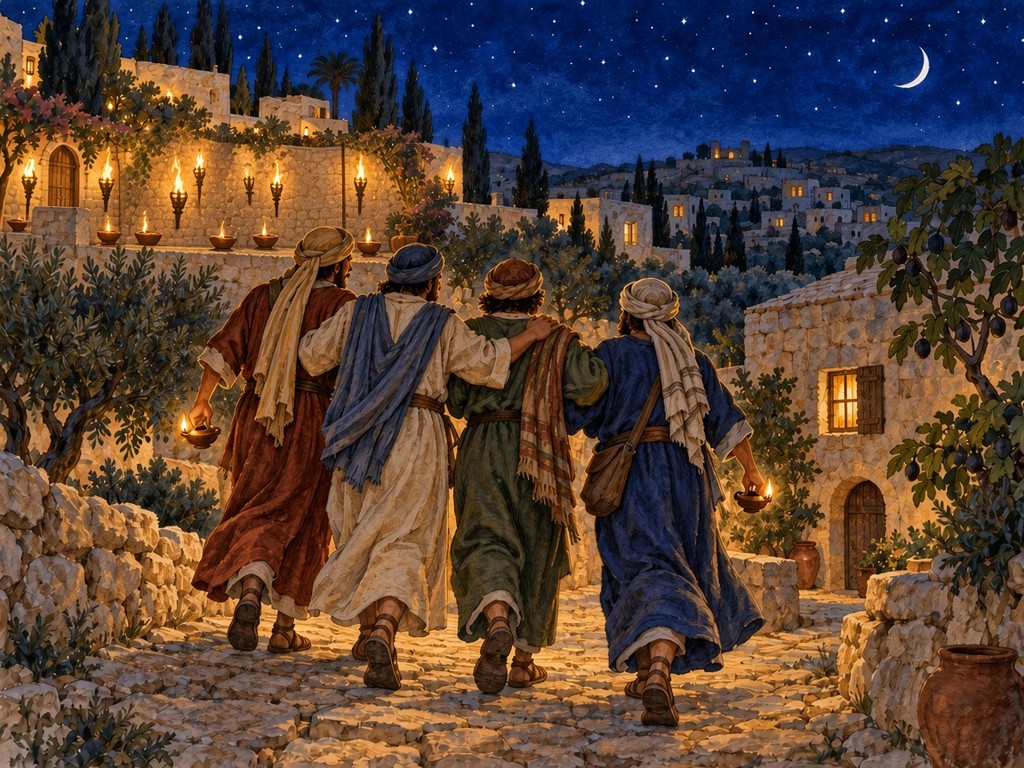
One night, the sons of Rabban Gamliel went to a simcha. The Mishnah calls it a “beis hamishteh,” a feast, and the Steinsaltz commentary explains it was a wedding.
They danced in circles. They sang. They brought joy to the chassan and kallah, which is a big mitzvah.
The lamps burned, the music went on, and the hours flew by. By the time the brothers finally walked home, it was very, very late at night.
And then one of them stopped on the path. “Wait… we never said Shema!”
“Abba, Is It Too Late?”
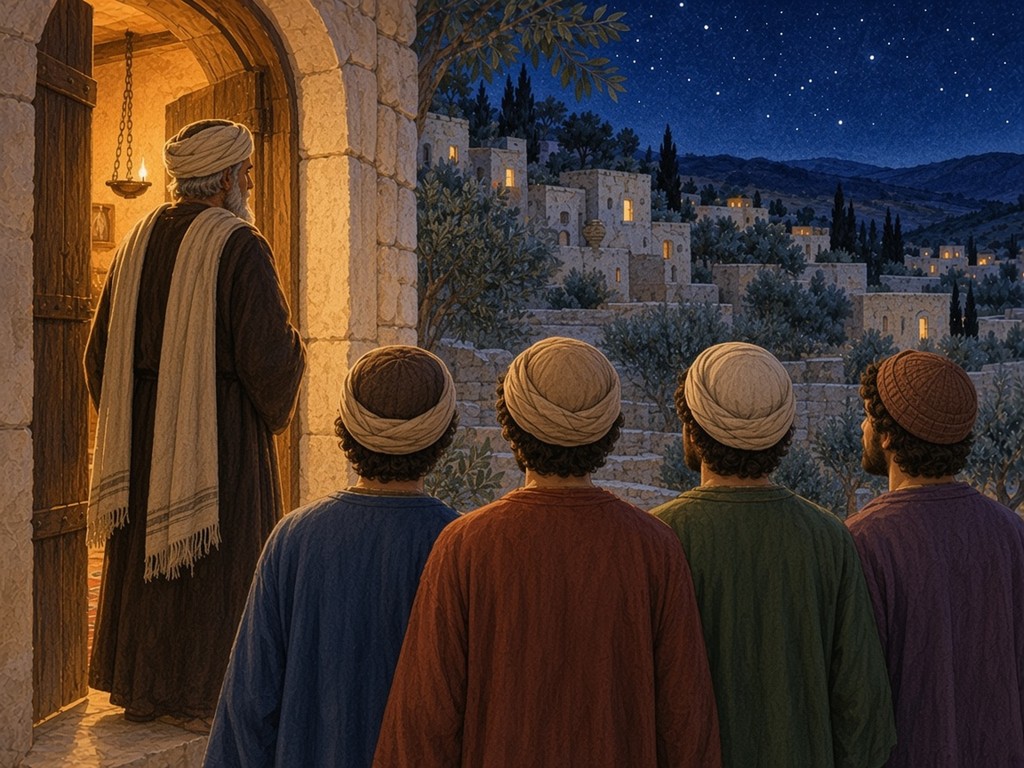
The brothers hurried to their father. “We haven’t said Shema yet!” they told him.
The Bartenura explains why they were worried. They had heard the Chachamim say “until midnight.” Was it too late now?
Rabban Gamliel answered:
אם לא עלה עמוד השחר חייבין אתם לקרות“If the dawn has not yet come up, you must still say it!”
As long as the night is still here, there is still time for Shema.
A Fence Around the Well
Then why did the Chachamim say “midnight”? Rabban Gamliel explains in the Mishnah:
כדי להרחיק את האדם מן העברה“To keep a person far from doing wrong.”
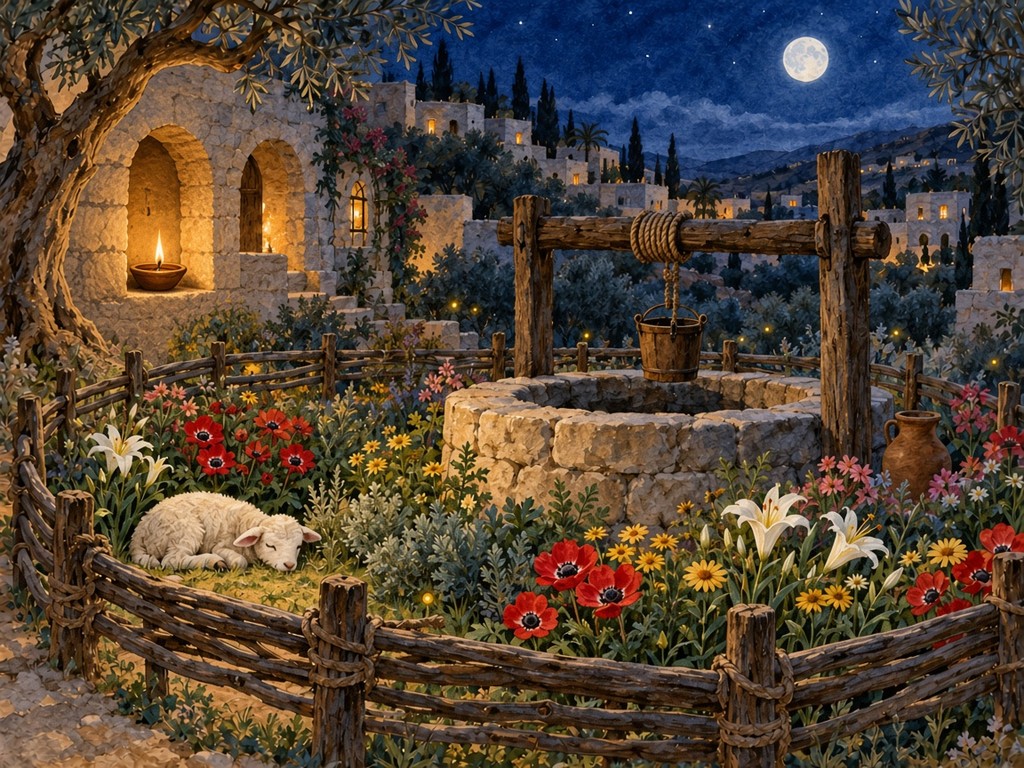
Think of a fence around a well. The fence stands a few steps before the edge, so everyone stays safe.
If people thought “I have all night,” they might say “I still have time…” and then miss Shema completely (Rashi). So the Chachamim built a fence: say it early! The Bartenura adds that once the time for Shema comes, we don’t sit down to a meal or go to sleep before we say it.
A Light in the Night
Why does the whole Gemara begin with night, and not with morning? The Gemara gives a reason from the story of Creation:
ויהי ערב ויהי בקר“There was evening, and there was morning.”
In Hashem’s world, the day begins at night.
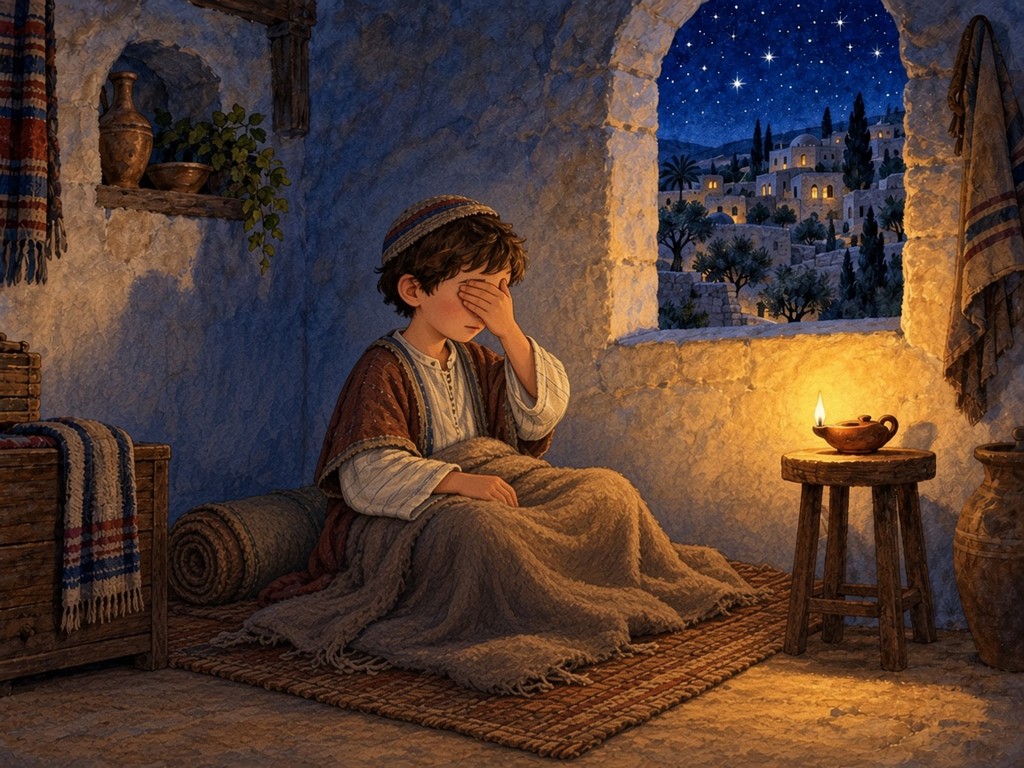
The Rebbe taught a lesson from this: don’t wait for the daylight. Even when it is dark, when things feel hard or sad or confusing, that is exactly the time to bring in light: a mitzvah, a word of Torah, a Shema said with your whole heart. Every moment is a chance. Just start!
And remember the kohanim. They weren’t sad when night came. They were waiting for it! Night was when they became pure again.